What is coronary heart disease?
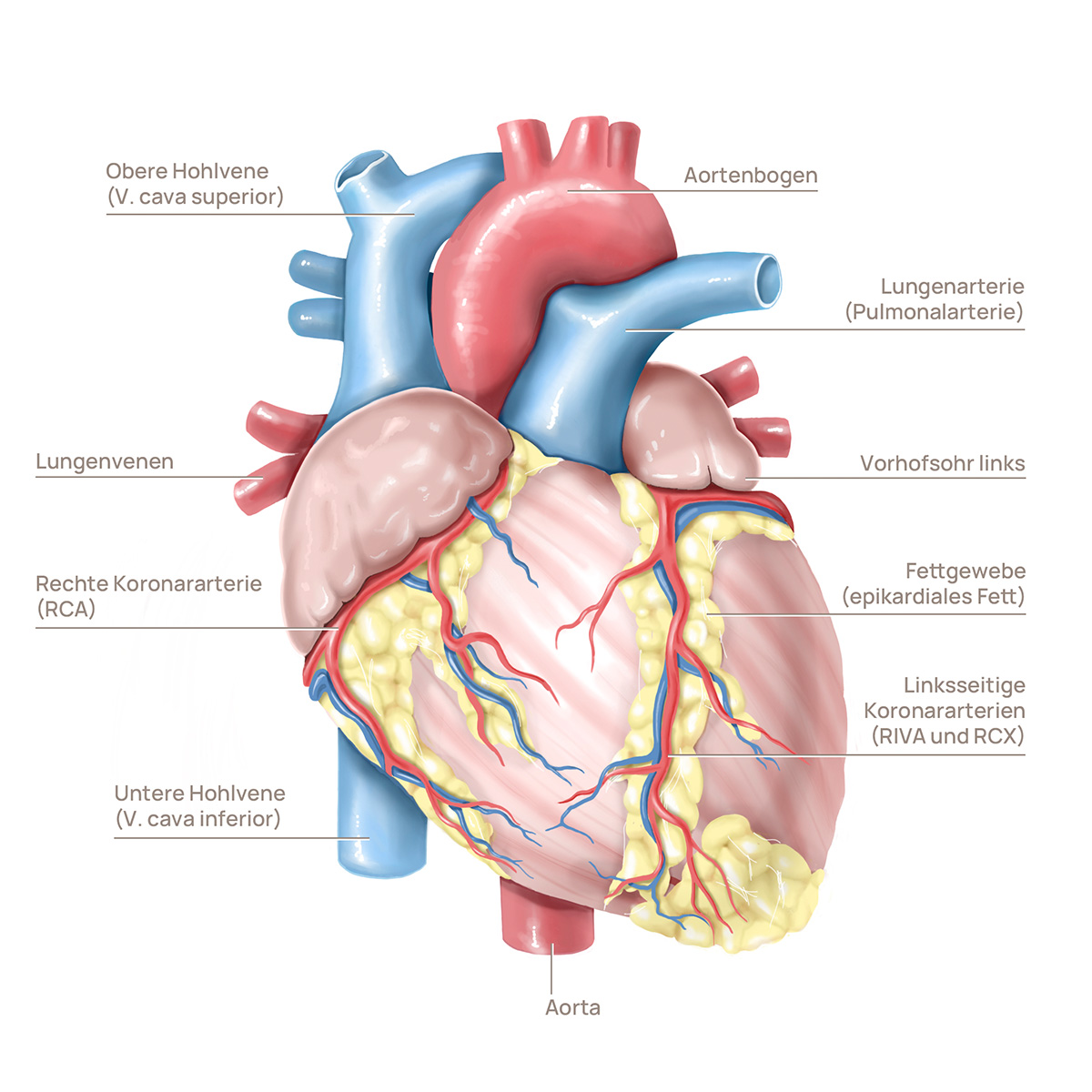
Coronary heart disease (CHD) is caused by a narrowing or blockage of the coronary arteries. These vessels supply the heart muscle with oxygen and nutrients. The cause is usually many years of arteriosclerosis, in which cholesterol and calcium are deposited as plaques on the vessel walls - often triggered by inflammation. This narrowing of the coronary arteries leads to circulatory disorders, as a result of which the heart muscle is no longer supplied with sufficient blood. The possible consequences include angina pectoris, heart attack, cardiac arrhythmia and heart failure (cardiac insufficiency ).
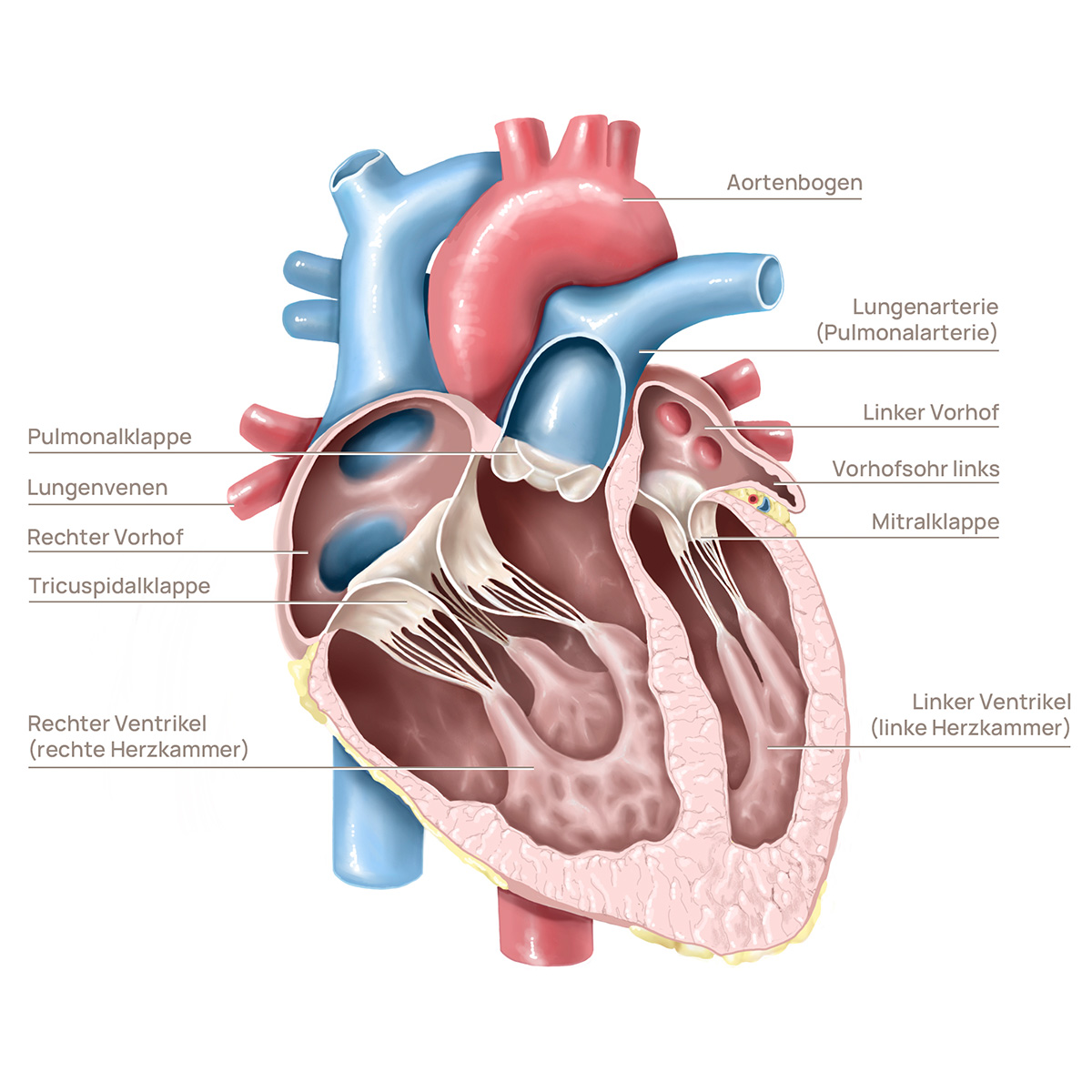
Structure of the heart
Symptoms of coronary heart disease
Typical symptoms of coronary heart disease are
-
Seizure-like pain
-
Burning behind the breastbone
This pain can radiate to other areas of the body such as the arms, shoulder blades, neck, back, upper abdomen or lower jaw. A feeling of tightness in the chest is also characteristic.
Causes and risk factors of coronary heart disease
The main cause of coronary heart disease is arteriosclerosis. The following risk factors can trigger coronary heart disease:
-
Age
-
Family predispositions
-
Smoking
-
Overweight
-
Lack of exercise
-
Stress
-
High blood pressure
-
High cholesterol level
-
Diabetes
Diagnosis of coronary heart disease
Various examinations are necessary to diagnose CHD. For example, non-invasive examinations. These include
-
Electrocardiogram (ECG)
-
Echography
-
Myocardial perfusion scintigraphy (MPS)
-
Cardiac magnetic resonance imaging (MRI)
-
Cardiac computed tomography (CT).
In addition to non-invasive examinations, there are also invasive examinations. These include coronary angiography, which usually requires a short hospital stay.
Treatment of coronary heart disease
Lifestyle changes
Drug treatments
Interventions
Emergency measures
When should expert advice be sought?
If you are unsure whether you have an acute emergency, you should seek expert advice quickly, for example from a GP or the medical on-call service.