Heart rhythm disturbances (arrhythmias)
What are cardiac arrhythmias?
Definition and basics of cardiac arrhythmias
Heart rhythm disorders, also known as arrhythmias, describe heartbeats that are too fast, too slow or irregular. The most common cardiac arrhythmias include extrasystoles (extra beats) and atrial fibrillation.
Causes and treatment options for cardiac arrhythmias
The causes of arrhythmias are varied and can include high blood pressure, obesity, alcohol consumption and snoring. Treatment ranges from medication to cardioversion, catheter ablation or the implantation of a pacemaker/defibrillator.
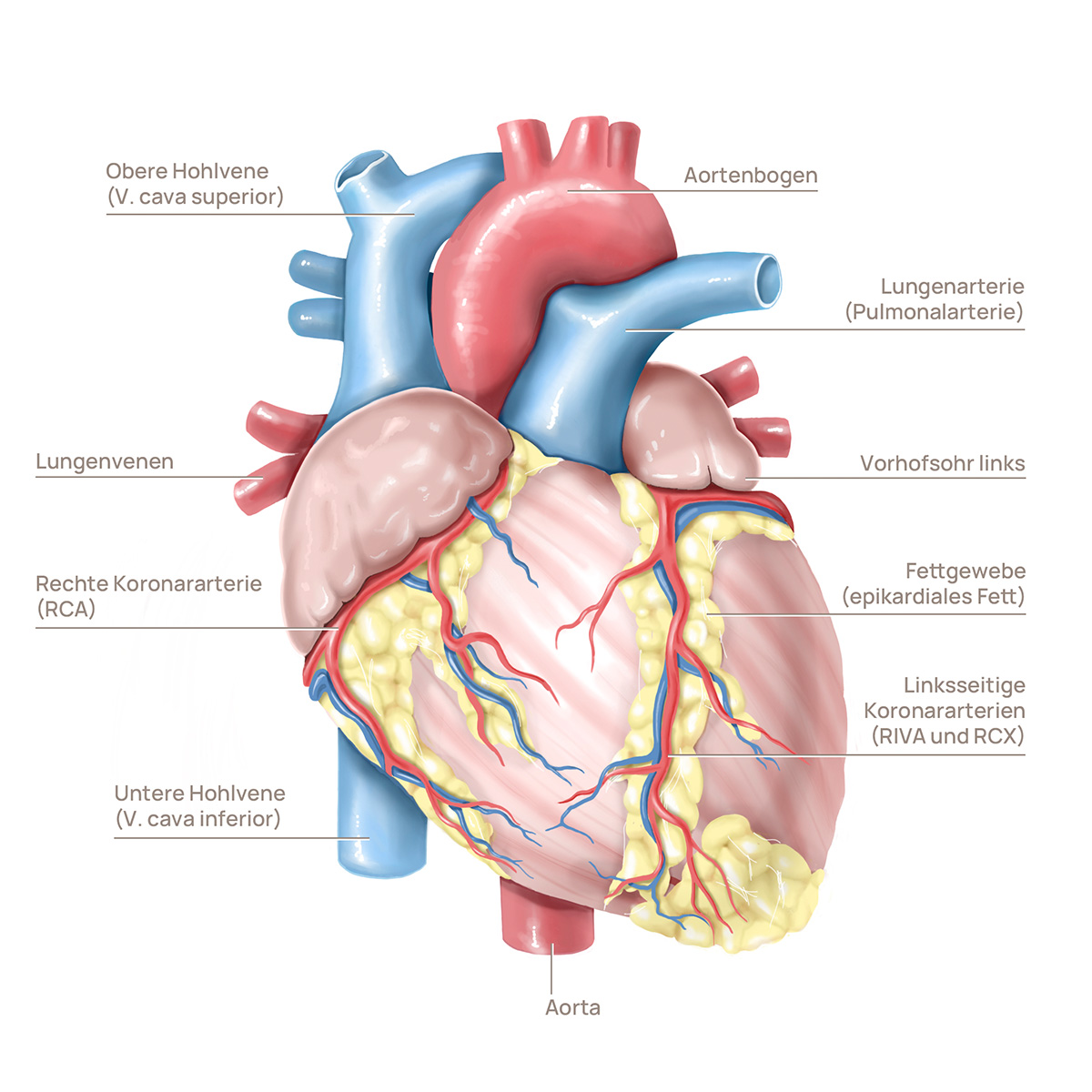
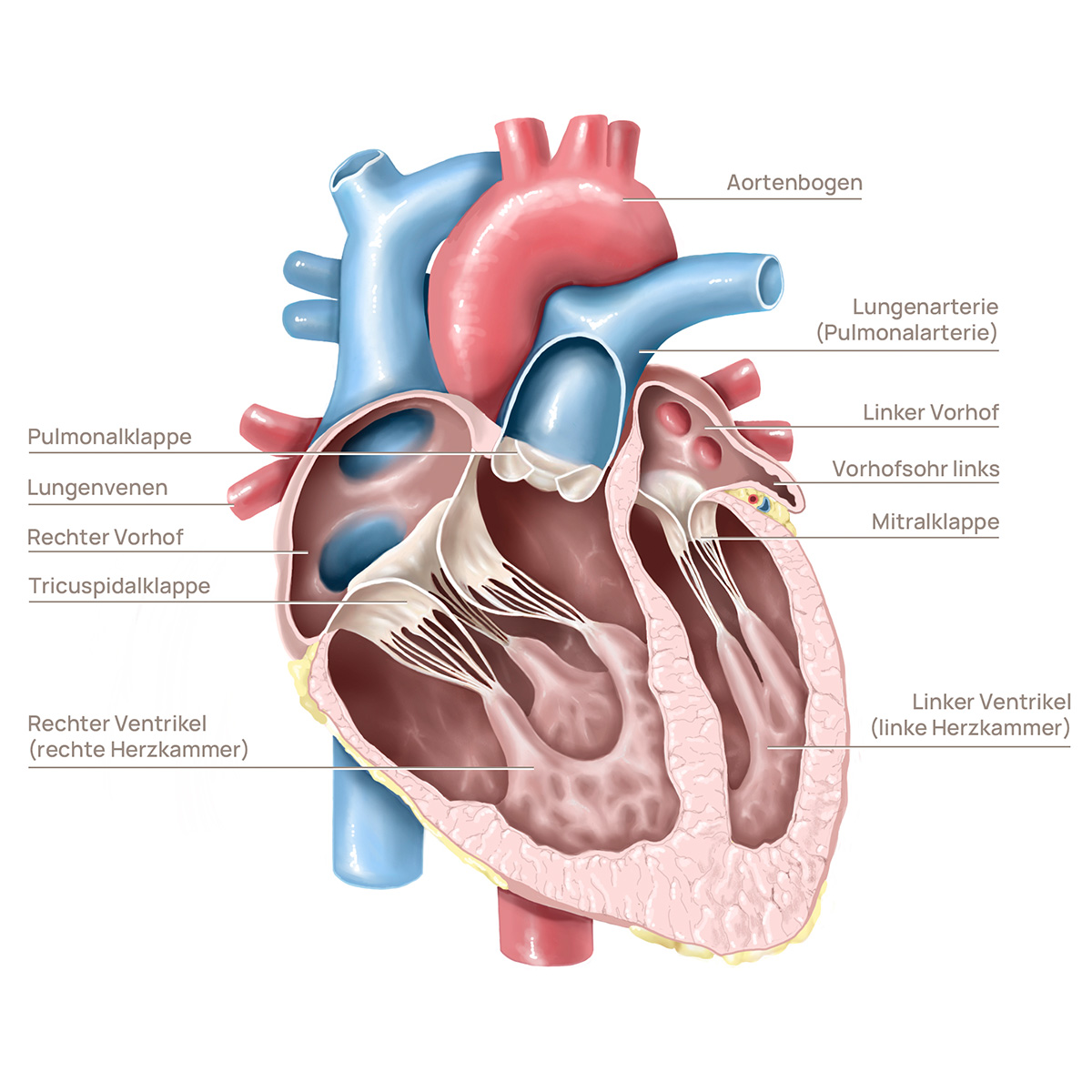
Anatomy of the heart
How do cardiac arrhythmias manifest themselves?
Cardiac arrhythmias are heartbeats that are too slow, too fast or irregular. Some arrhythmias are not noticed at all, while others are noticeable as skips or palpitations.
What is the most common cardiac arrhythmia?
The most common cardiac arrhythmia is atrial fibrillation. Most disorders are not immediately dangerous and can be treated.
Diagnosis of cardiac arrhythmias
Cardiac arrhythmias can be reliably detected by electrocardiogram (ECG). A long-term ECG measurement is necessary for occasional disturbances. An ECG device records the electrocardiogram over a period of 24 to 72 hours.
Treatment of cardiac arrhythmias
Depending on the cause and severity of the arrhythmia, various treatment options are available:
Drug treatment for cardiac arrhythmia
Therapy through electrocardioversion
Lifestyle adjustments
Treatment by catheter ablation
Pacemaker for cardiac arrhythmia
When and how should a cardiac arrhythmia be treated?
Cardiac arrhythmias are treated when they:
- Carrying the risk of sudden cardiac death
- The following can lead to a stroke
- Impairing physical performance
- Distress the affected person with symptoms such as dizziness, palpitations or malaise
Are cardiac arrhythmias dangerous?
Most cardiac arrhythmias are not immediately dangerous. Ventricular fibrillation, on the other hand, is life-threatening and requires immediate life-saving measures.