Angina pectoris
What is angina pectoris?
Angina pectoris, also known as "heart pain", is a symptom that occurs in coronary heart disease. It manifests itself as a feeling of tightness and pain in the chest area. These symptoms can lead to a heart attack, cardiac arrhythmia or heart failure.
Typical symptoms of angina pectoris are pressure, pulling or burning in the chest. The pain often radiates to the arms, upper abdomen or jaw. The pain can intensify under stress. There are also atypical forms in which the symptoms occur differently, such as a burning or stinging sensation, shortness of breath or fatigue that is independent of exertion. Women often develop atypical heart pain.
Structure of the heart
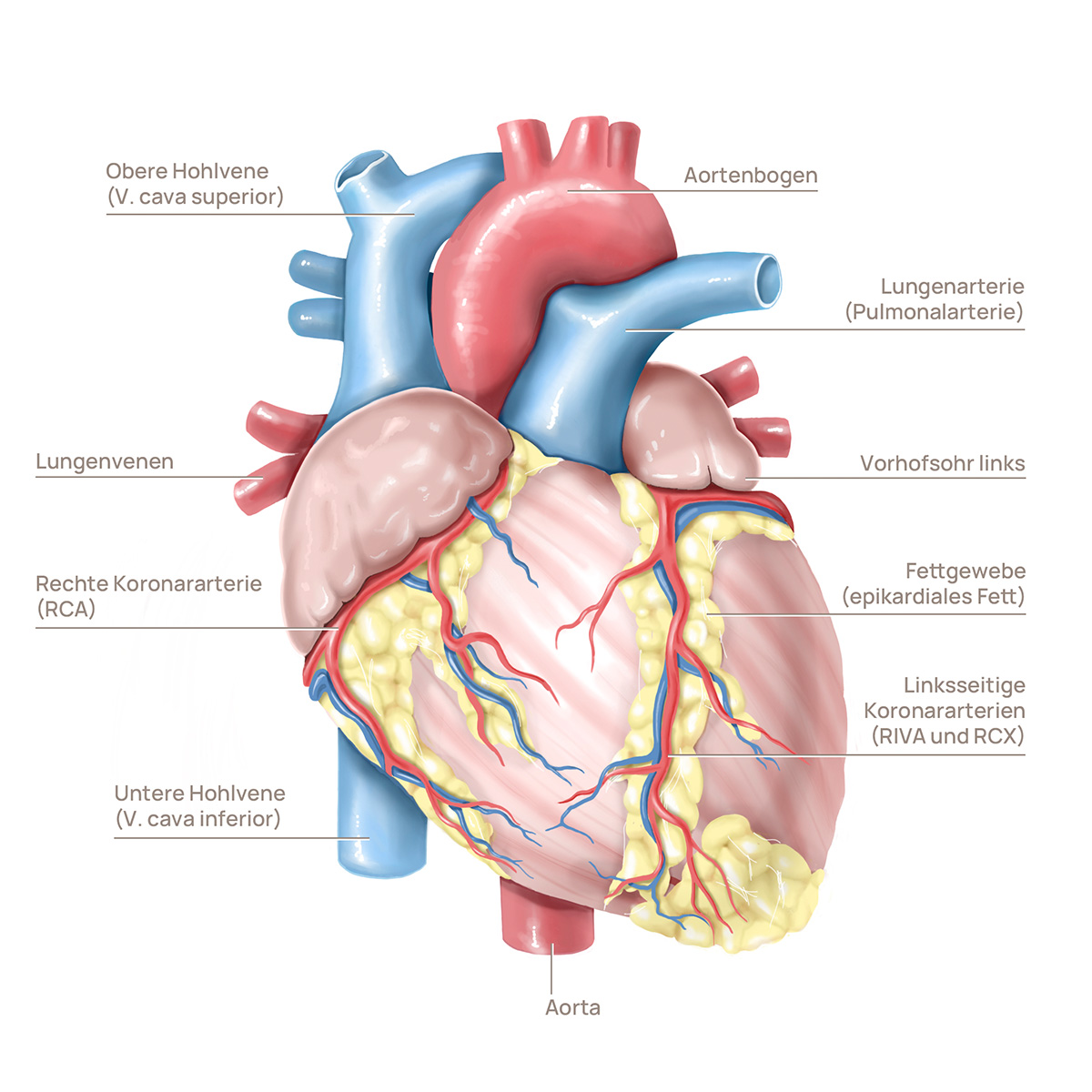
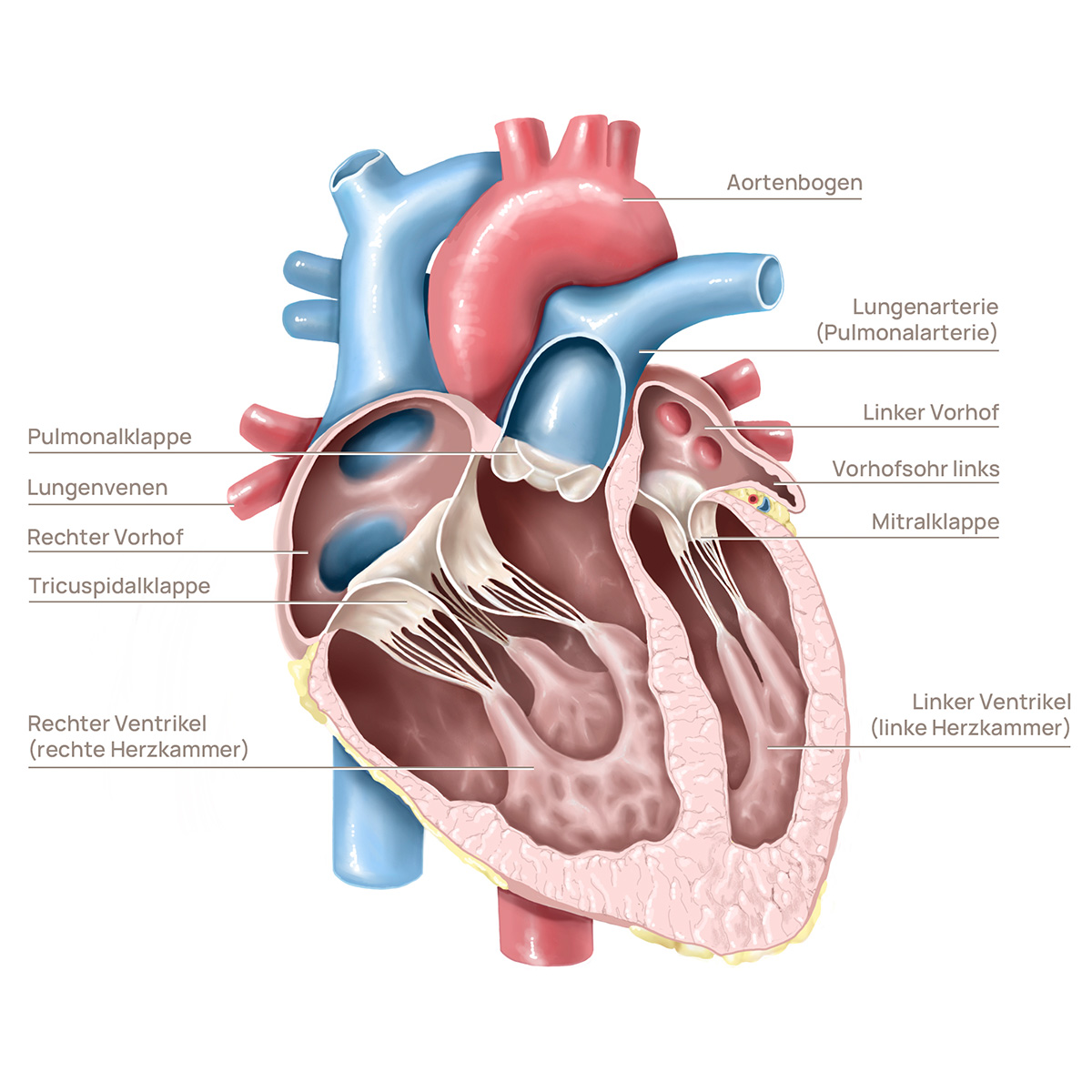
What is angina pectoris?
Angina pectoris literally means "chest tightness". It is caused by coronary heart disease (CHD), in which the coronary arteries are severely narrowed, usually due to arteriosclerosis. This leads to poor blood flow to the heart. There are two main types of angina pectoris: stable and unstable. Other causes of constriction are coronary artery spasms (Prinzmetal's angina) or allergic reactions (Kounis syndrome).
Causes of angina pectoris
The causes of angina pectoris affect the blood flow to the heart muscle and cause symptoms such as burning or pressing pain in the chest. The following causes can lead to angina pectoris:
-
High blood pressure
-
High LDL cholesterol level
-
Smoking
-
Diabetes
-
Lack of exercise
-
Overweight
Stable and unstable angina pectoris
In stable angina pectoris, symptoms only occur during physical exertion and improve with rest or medication such as nitro spray. Unstable angina pectoris occurs even with little exertion or at rest and lasts longer, which may indicate an impending heart attack. In such cases, blood clots can completely block the coronary artery, which quickly leads to the death of heart muscle cells without a blood supply.
Diagnosis of angina pectoris
Non-invasive examinations such as ECG, echocardiography, myocardial perfusion scintigraphy (MPS), cardiac MRI and cardiac CT as well as invasive methods such as coronary angiography are used for diagnosis.
Treatment of angina pectoris
Lifestyle changes
Medication
Coronary angioplasty and bypass surgery
Emergency and further information
Unstable angina pectoris, which suddenly becomes more frequent and severe, lasts longer or occurs at rest, is an emergency and can lead to a heart attack. If you experience such symptoms, you should call the emergency number 144 immediately.
GPs or cardiologists are the right contacts for chest complaints, and additional support is provided by online advice.