Heart failure
What is heart failure?
Heart failure, also known as cardiac insufficiency, refers to a reduced pumping capacity of the heart, which means that the body is no longer supplied with sufficient oxygen-rich blood. This condition can reduce the performance of the entire body and usually occurs as a result of various cardiovascular diseases. Treatment with medication can alleviate the symptoms, slow down the progression of the disease, improve quality of life and increase longevity.
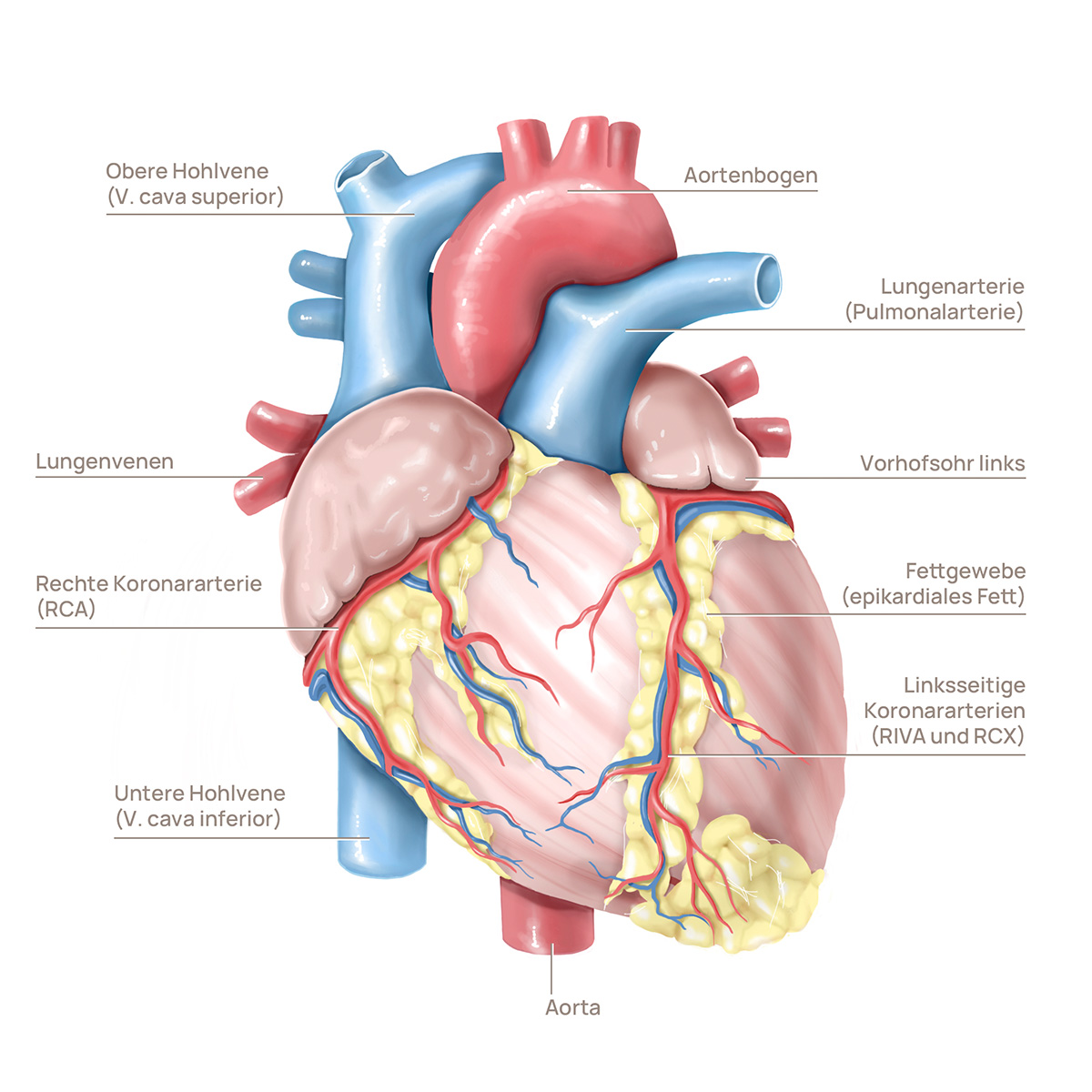
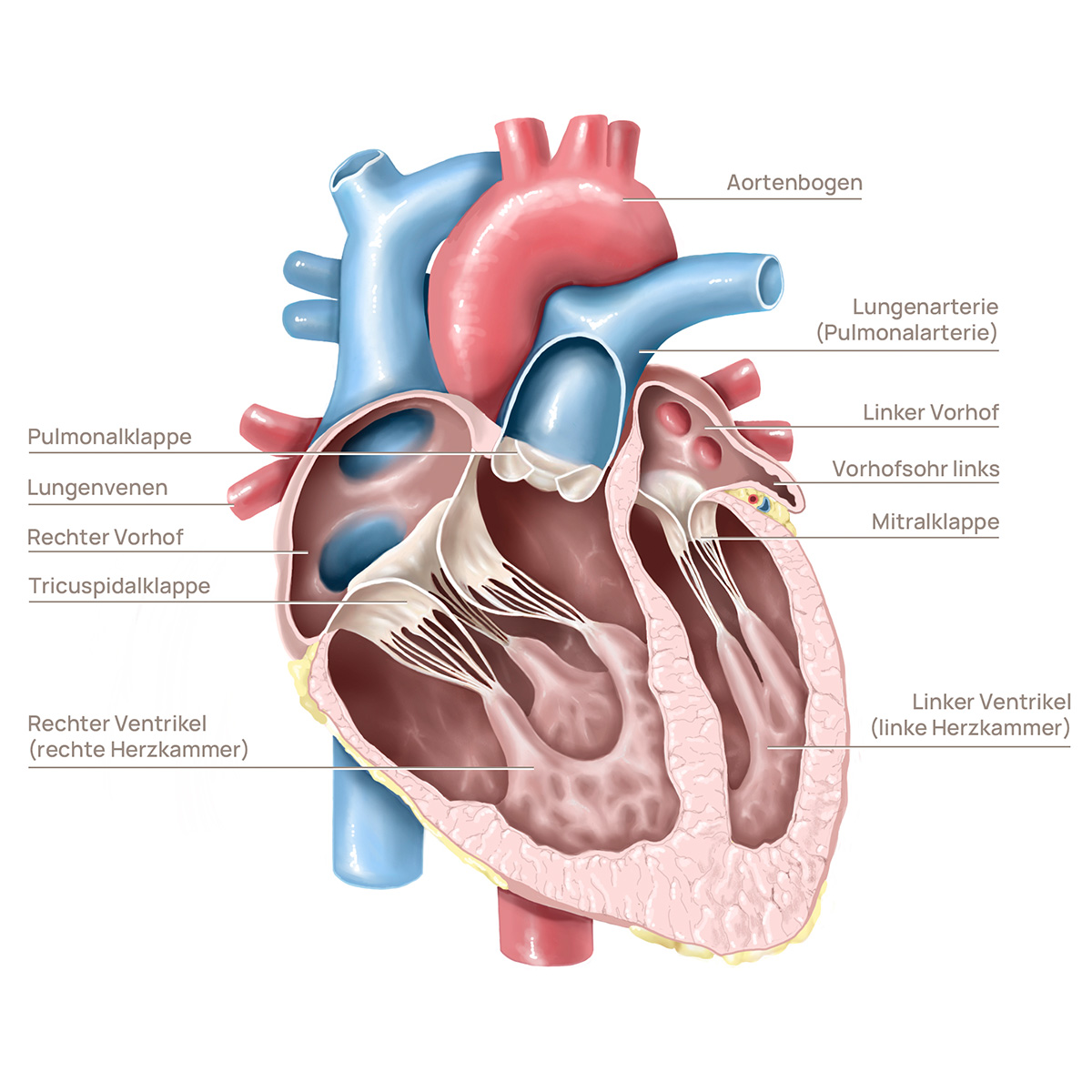
Anatomy of the heart
Symptoms and signs of heart failure
The symptoms of heart failure can vary in severity and worsen over time.
- Fatigue and exhaustion during physical exertion
- Shortness of breath during heavy physical exertion
- Shortness of breath at rest or in bed at night
- Water retention in the legs, ankles and feet
- Swelling in the abdomen, which can lead to gastrointestinal complaints
- Sudden weight gain and urge to urinate at night
- Cough with foamy phlegm
- Difficulty sleeping due to shortness of breath
- Increased urge to urinate at night
Diagnostics
Only a doctor can determine whether you have heart failure and how advanced the disease is. The diagnostics include
Medical history and physical examination
- Take a medical history
- Physical examination
Further investigations
- Echocardiogram (ultrasound of the heart)
- Electrocardiogram (ECG)
- X-ray of the chest
- Load test
- Cardiac catheterization (if necessary)
The doctor will regularly examine the pumping function of the heart, e.g. by means of echocardiography.
Possible diagnoses
These methods can be used to identify the following causes of the complaints:
Drug treatment
Technical aids
Lifestyle adjustments
Invasive interventions
Monitoring the disease
Prevention and self-management
The treatment of heart failure is not the doctor's job alone. Patients, loved ones and the doctor form a team.
Self-control
- Monitoring of medication, water and salt intake, blood pressure and weight
- Rapid response to alarm signs of sudden deterioration to avoid complications and hospitalization
Healthy lifestyle
- Stop smoking
- Balanced diet
- Avoidance of excess weight
- Sufficient exercise
- No permanent stress
Aim of the treatment
The main aim of heart failure treatment is to alleviate the symptoms and delay the progression of the disease. Consistent therapy can help patients to lead an active life and have a longer life expectancy despite heart failure.