Heart valve diseases
Our heart has four heart valves that prevent blood from flowing in the wrong direction when pumping. These heart valves are the aortic, pulmonary, mitral and tricuspid valves. They ensure the correct direction of blood flow by opening and closing at the right moment so that the four chambers of the heart can be optimally filled and emptied with blood. Heart valves can become leaky (insufficiency) or too narrow (stenosis) due to age, inflammation, genetic predisposition or high blood pressure. Depending on the findings, this requires treatment with medication, a catheter intervention or an operation.
Structure and function of the heart valves
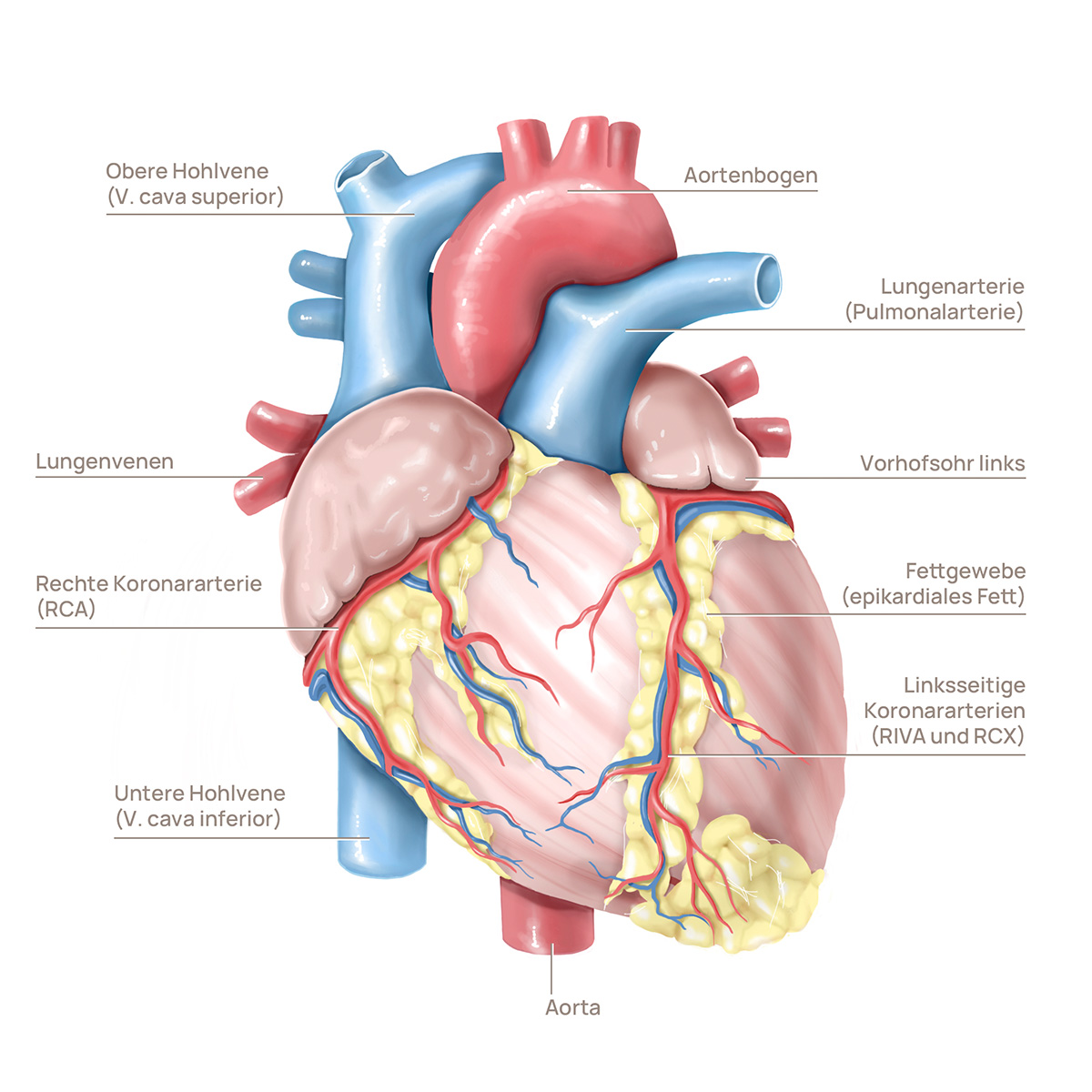
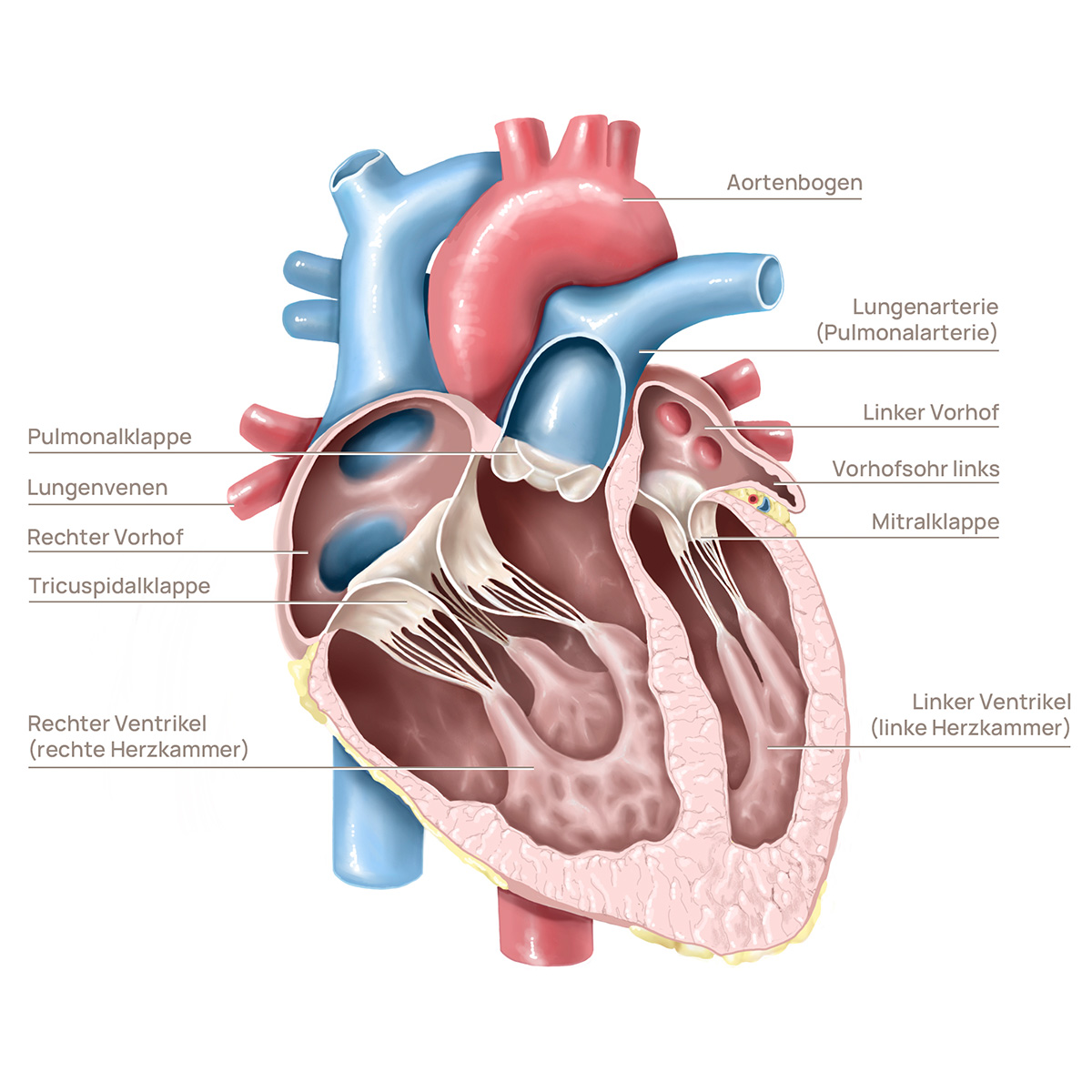
Pulmonary valve
Also consists of three crescent-shaped pockets and ensures that the blood is pumped into the pulmonary artery and does not flow back into the right ventricle.
Aortic valve
Consists of three crescent-shaped pockets and ensures that the blood is pumped into the aorta and does not flow back into the left ventricle.
Tricuspid valve
Consists of three leaflets and ensures that the right ventricle can fill and the blood does not flow back into the right atrium.
Mitral valve
Consists of two sails and ensures that the left ventricle can fill and the blood does not flow back into the left atrium.
Causes of valvular heart disease
Heart valve diseases can be congenital or caused by wear and tear in old age, inflammation, heart failure or radiotherapy. In rare cases, medication can also lead to heart valve disease.
Symptoms of valvular heart disease
The symptoms vary depending on the type of disease:
- Shortness of breath that increases with exertion
- Severe dizziness up to collapse
- Severe fatigue or even unconsciousness during physical exertion
- Feeling of pressure or burning in the chest during physical exertion
- Shortness of breath, shortness of breath or difficulty breathing during physical exertion
- Limited physical performance
- Cardiac arrhythmia: Palpitations, skipping or fluttering of the heart, the feeling of an irregular heartbeat
- Loss of appetite, nausea, vomiting
- Water retention in the legs
Diagnosis and treatment of heart valve disease
If heart valve disease is suspected, comprehensive diagnostics are carried out at the Lahr Heart Center. This includes
Diagnostic methods
- ECG: Exercise and long-term ECG
- Echocardiography3D echocardiography, stress echocardiography and transesophageal (via the esophagus) echocardiography
- Further examinations: Chest X-ray, cardiac catheterization, computed tomography of the coronary arteries or ascending aorta
Possible diagnoses
These methods can be used to identify the following causes of the complaints:
Treatment options for heart valve disease
Depending on the severity of the disease, a diseased heart valve can be treated by surgery or a catheter-based procedure (percutaneous).