The latest findings
Now that the acute phase of the corona pandemic is over, more and more long-term consequences are gradually becoming known. No organ is really spared from Covid-19, not even the heart. This article looks at how the virus affects the heart health of adults.
At the beginning of the corona pandemic, Covid-19 was primarily considered a lung disease. We now know that the virus can damage the entire body, including the heart and circulatory system. Age, gender, previous illnesses, vaccination status and other factors can influence the course of the disease. It is therefore impossible to predict precisely whether and to what extent the heart will be affected during and after the infection.
The heart during infection
When the body fights the coronavirus, the heart can also be affected in addition to the lungs, which are particularly affected. This manifests itself in chest pain, palpitations (rapid heartbeat) and arrhythmias (irregular heartbeat), for example. Even the slightest exertion can be too much. If these symptoms do not occur, relevant heart damage is unlikely.
Possible consequences of a corona infection for the heart
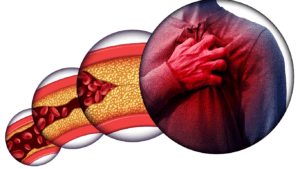
Even if the virus is no longer detectable in the body, corona can have lasting consequences for heart health. In addition to the arrhythmias already mentioned, the following clinical pictures, for example, may also be attributable to a corona infection: Myocarditis (inflammation of the heart muscle) or pericarditis (inflammation of the pericardium), stress cardiomyopathy, heart failure/heart failure, cardiac arrhythmia and pulmonary hypertension (high lung pressure). The risk of a heart attack or stroke can increase. Another consequence may be endothelial dysfunction, in which the blood vessels are affected, which can lead, among other things, to an accelerated occurrence of arteriosclerosis, the so-called "hardening of the arteries", which forms the basis of coronary heart disease.
Studies show that one year after a corona infection there may still be an increased risk of various types of heart disease such as cardiac arrhythmia or heart failure and that the risk of embolism and thrombosis may also be increased.
Covid-19 - more than just a lung disease
Initially, the coronavirus was thought to be purely a lung disease. However, the more we learn about the long-term consequences, the clearer it becomes that a Covid-19 infection occasionally also affects the heart. We should therefore start to think about the consequences of a viral disease when it comes to heart problems. The team at the Cardiovascular Center Im Park will be happy to answer any questions and provide information.