Aortic diseases and connective tissue weakness: causes, symptoms, and treatment
Aortic diseases can lead to an enlarged aorta, i.e., an aortic aneurysm. This can be caused by a genetic predisposition and/or other factors such as smoking or high blood pressure. Over 70% of patients with an aortic aneurysm have high blood pressure. An additional weakness of the connective tissue can increase the risk of aortic aneurysms and aortic dissections (tears in the aortic wall). These connective tissue disorders are often caused by genetic disorders that weaken the connective tissue and impair the stability of the aorta. Early detection and targeted treatment can prevent life-threatening complications. In contrast to abdominal aortic aneurysms, genetics play a more important role in aortic aneurysms above the diaphragm.
Genetic disorders as a cause of aortic aneurysms or aortic diseases
Genetic disorders that weaken connective tissue are a possible cause of aortic disease, alongside other etiologies such as high blood pressure, smoking, vascular inflammation, and arteriosclerosis. The most well-known connective tissue disorders include diseases associated with syndromes such as Marfan syndrome, Loeys-Dietz syndrome, and vascular Ehlers-Danlos syndrome. There are also familial forms outside of a syndrome, or aortic aneurysms caused by a bicuspid aortic valve or other congenital heart disease. Nowadays, genetic testing is highly recommended in cases of aortic dilation/aortic aneurysm.
Structure of the heart
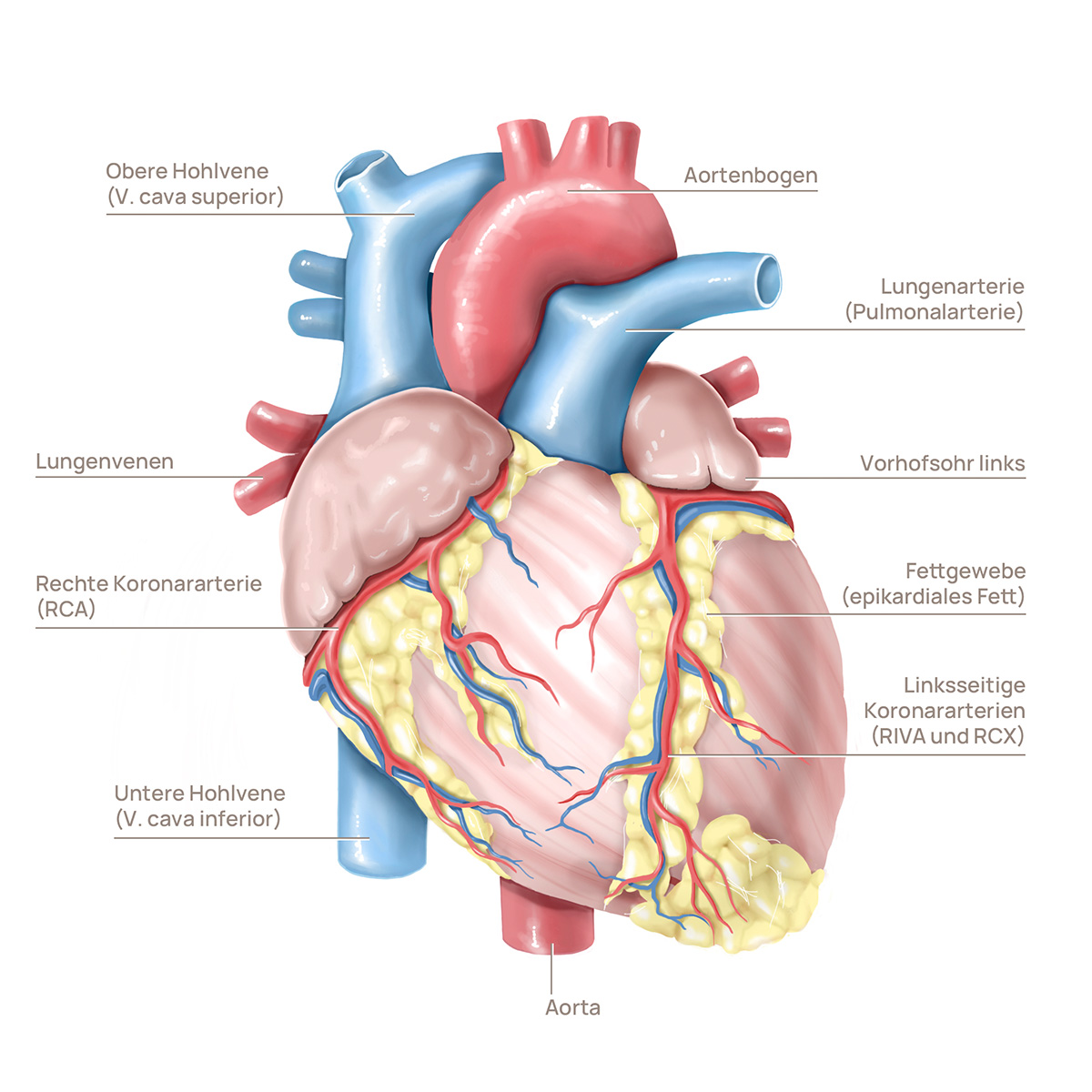
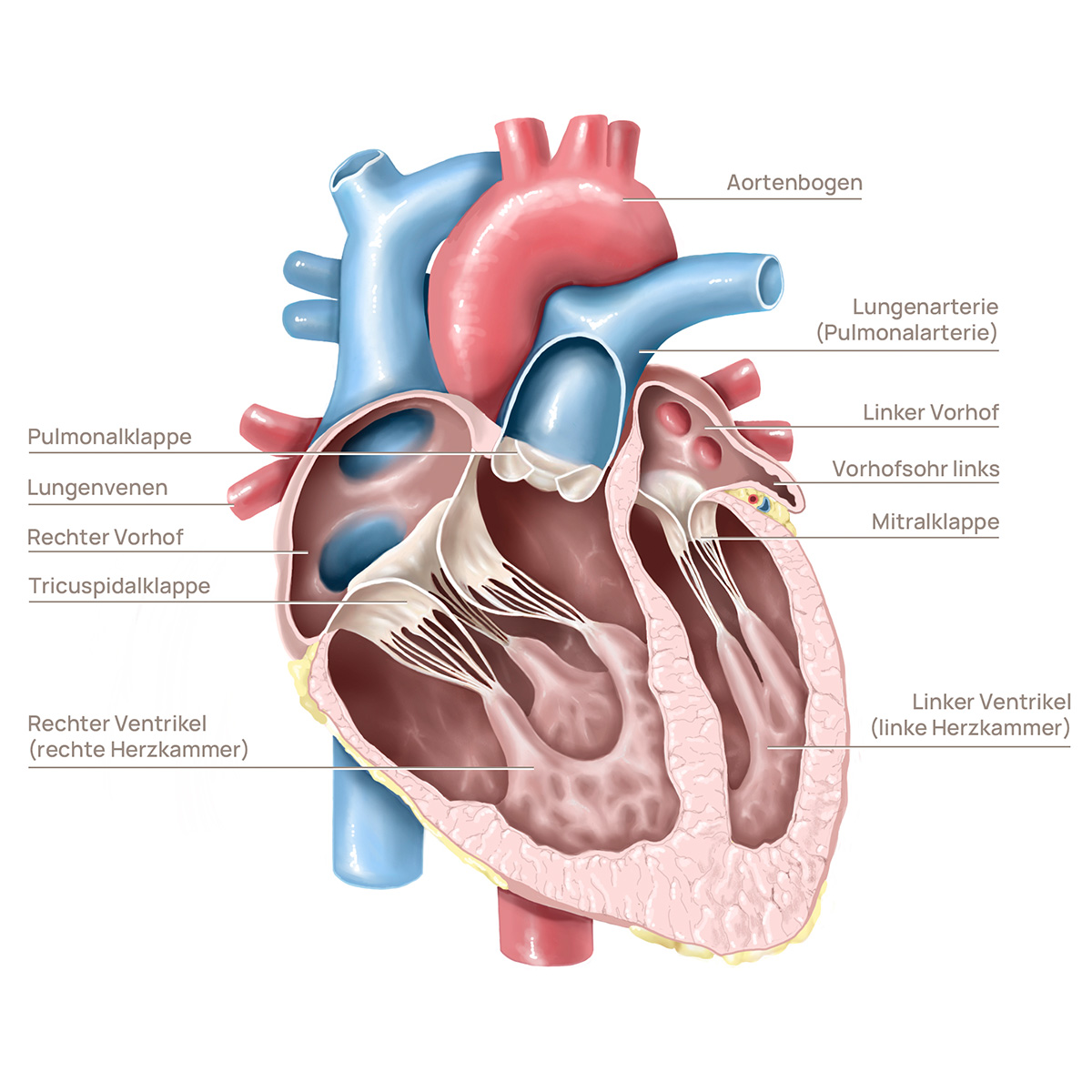
Aortic complications in connective tissue weakness
Congenital connective tissue weakness can lead to serious complications affecting the aorta, especially if it is not diagnosed or treated. These complications can be life-threatening without surgical intervention.
An aortic aneurysm is a pathological enlargement of the aorta caused by weakening of the vessel wall. It often occurs in genetic disorders such as Marfan syndrome and often goes unnoticed for a long time. However, the most common cause of an aortic aneurysm is thought to be high blood pressure.
An aortic dissection occurs when the inner layer of the aortic wall tears and blood enters between the layers of the wall. This leads to a life-threatening situation that requires immediate treatment.
An aortic rupture is a complete tear in the aortic wall and one of the most serious complications of connective tissue weakness. Without immediate medical intervention, it is usually fatal.
Affected structures in connective tissue weakness
Weak connective tissue affects the stability and function of numerous structures in the body.
Extracellular matrix proteins and structural proteins
The extracellular matrix and the structural proteins of the smooth vascular muscles ensure the stability of the aortic wall. Mutations in genes such as FBN1 can weaken these structures and lead to diseases such as aneurysms.
TGF-beta signaling pathway
The TGF-beta signaling pathway is essential for the regulation of connective tissue. Disruptions in this signaling pathway, such as in Marfan syndrome or Loeys-Dietz syndrome, can lead to severe aortic diseases.
Genetic factors and phenotypic variability
Genetic factors determine not only the risk of aortic disease, but also its progression and severity. However, even with the same gene, the severity of the disease can vary, which is known as phenotypic variability.
Significance of genetic variability
Genetic variability influences the risk of complications and the severity of symptoms. Early genetic diagnosis can help to better assess individual risk.
Associated diseases and symptoms
Connective tissue weakness can be associated with other diseases and symptoms that often provide clues to an underlying genetic disorder.
Risk factors for aortic diseases
In addition to genetic causes, there are modifiable risk factors that increase the risk of aortic disease.
High blood pressure
Smoking
Overweight and elevated blood lipids
Diagnostic procedures for aortic diseases
Early and accurate diagnosis is crucial for detecting aortic diseases in time and preventing complications.
echocardiography
Echocardiography is an ultrasound procedure that displays the aorta and heart valves in real time. It is ideal for the early detection of aneurysms or heart valve defects.
Magnetic resonance imaging (MRI) and computed tomography (CT)
MRI and CT scans provide detailed images of the aorta and show any enlargements (aneurysms) and tears. These examinations are particularly useful in diagnosing aortic dissections and aneurysms. Unlike CT scans, MRI scans do not involve exposure to radiation.
Conclusion
Detect and treat connective tissue weakness at an early stage
Aortic diseases and connective tissue weakness are often genetic and can lead to serious complications. Early diagnosis, genetic testing, and regular check-ups are crucial to minimizing risks. At the Cardiovascular Center, we offer comprehensive diagnostics and individualized treatment approaches—for your safety and health. Contact us!